
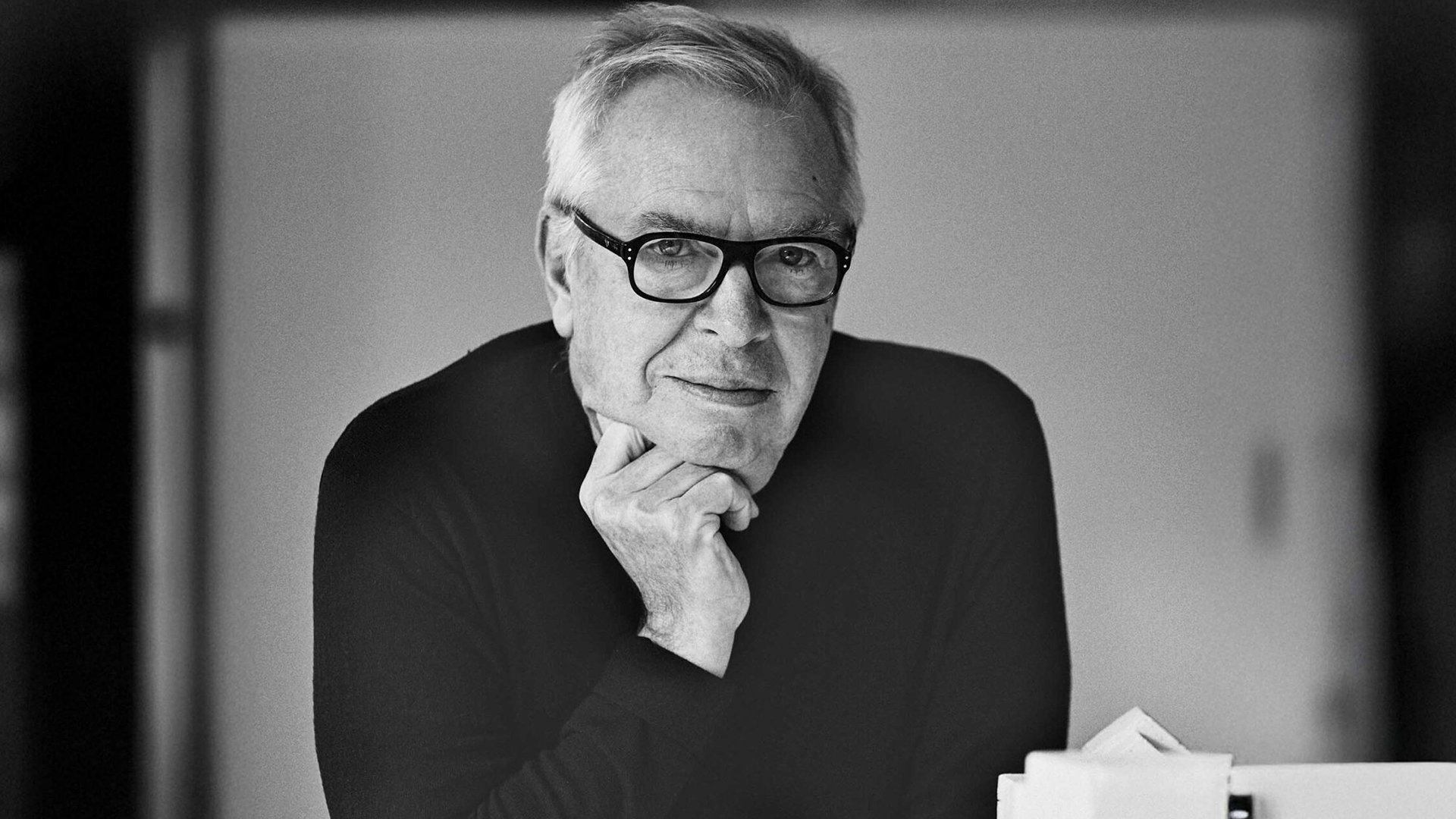
دیوید آلن چیپرفیلد
ترجمه این متن توسط دیانا آزادی، دانشجوی کارشناسی معماری، صورت گرفته است
(فارسی)
زنـدگـی نـامـه
زبان معماری او تعادلی است میان ثبات در اصول بنیادی طراحی و انعطافپذیری نسبت به فرهنگهای محلی
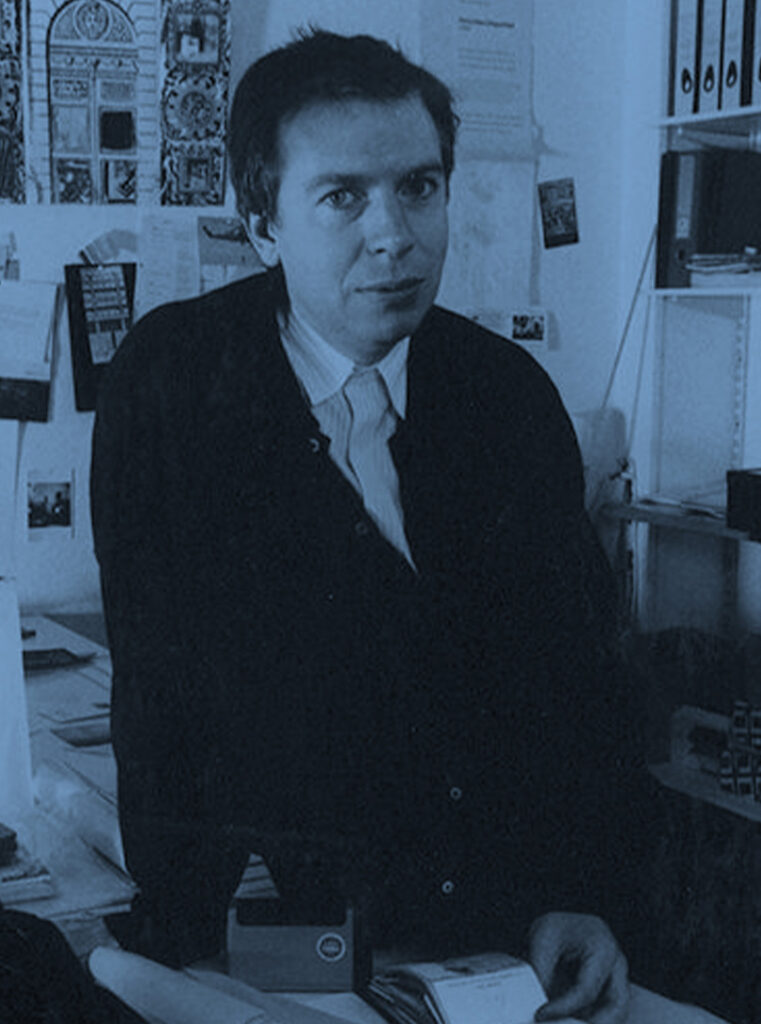
سر دیوید آلن چیپرفیلد (متولد ۱۹۵۳) در لندن به دنیا آمد و در یک مزرعه روستایی در دوون، واقع در جنوبغربی انگلستان، بزرگ شد. مجموعهای از انبارها و ساختمانهای جانبی، سرشار از شگفتیهای دوران کودکی و خاطرات، نخستین برداشت عمیق و ملموس او از معماری را شکل داد
«فکر میکنم معماری خوب بستری را فراهم میکند؛ هست و در عین حال نیست. مانند همه چیزهایی که معنای عمیق دارند، هم در پیشزمینهاند و هم در پسزمینه، و من همیشه مجذوب پیشزمینه نیستم. معماری میتواند آیینها و زندگی ما را تقویت، پشتیبانی و غنیتر کند. تجربههایی که در زندگی بیش از همه به آنها گرایش دارم و از آنها لذت میبرم، زمانی است که امور عادی به شکلی خاص و ویژه تبدیل شدهاند، نه زمانی که همهچیز صرفاً حول «خاص بودن» میچرخد.»
چیپرفیلد در سال ۱۹۷۶ از مدرسه هنر کینگستون و در سال ۱۹۸۰ از مدرسه معماری انجمن معماران لندن فارغالتحصیل شد؛ جایی که آموخت چگونه نگاهی انتقادی داشته باشد و پتانسیل هر عنصر را دوباره بازتصور کند تا بتواند هر پروژه را فراتر از وظیفه اصلی آن گسترش دهد.
«طراحی صرفاً به یافتن رنگها و شکلها محدود نمیشود، بلکه فرآیند پرورش مجموعهای از پرسشها و ایدههاست که از انسجام و پیامدی مشخص برخوردارند. اگر بتوانید چنین مسیری را طی کنید، مهم نیست کدام راه را برگزینید؛ مهم این است که آن را بهدرستی ادامه دهید و در طول مسیر، پیامدهای انتخابتان را با جدیت دنبال کنید.»
شروع کار حرفهای او با طراحی داخلی یک فروشگاه برای ایسِی میاکه فقید در خیابان اسلون آغاز شد؛ تجربهای که راه را برای پروژههای معماری در ژاپن گشود. «موزه رودخانه و قایقرانی» (هنلی-آن-تیمز، بریتانیا، ۱۹۸۹–۱۹۹۷) نخستین ساختمان او در زادگاهش بود. او سپس فعالیتهای خود را در عرصه بینالمللی ادامه داد و به موفقیتهای مهمی همچون بازسازی و بازآفرینی «موزه نویس» (برلین، آلمان، ۱۹۹۳–۲۰۰۹) و ساخت «گالری جیمز-سایمون» (برلین، آلمان، ۱۹۹۹–۲۰۱۸) دست یافت. چیپرفیلد حس عمیق مسئولیتپذیری خود را حاصل این سالهای شکلدهنده حرفهاش میداند؛ سالهایی که به ساخت در کشورهای دیگر و برای فرهنگهای متفاوت گذشت.
همکاری همواره از ارکان اساسی فعالیت حرفهای دیوید چیپرفیلد بوده است و او با اطمینان بر این باور است که «واقعیت این است که ساختمانهای خوب از فرآیندهای خوب زاده میشوند و فرآیند خوب یعنی درگیر شدن و همکاری با نیروهای مختلف.» طی چهار دهه فعالیت، او بیش از صد پروژه متنوع در نوع و گستره جغرافیایی خلق کرده است؛ پروژههایی که از ساختمانهای شهری، فرهنگی و دانشگاهی تا فضاهای مسکونی و طرحهای جامع شهری را در آسیا، اروپا و آمریکای شمالی دربرمیگیرند.
با گسترش روزافزون فعالیتهایش، تعهد او به رفاه اجتماعی و حفاظت محیطزیست نیز تقویت شد. او کالایی شدن معماری را که بیشتر در خدمت قدرتهای جهانی است تا جامعه محلی، و همچنین فقدان پایداری مرتبط که به بحران اقلیمی دامن میزند، به شدت نقد میکند. او میگوید:
«معماران نمیتوانند خارج از جامعه عمل کنند. ما نیاز داریم جامعه همراه ما باشد. بله، شاید بتوانیم تحریک کنیم، اعتراض کنیم و مدلهایی ارائه دهیم، اما به چارچوبی برای برنامهریزی، اهداف و اولویتهایی نیاز داریم. در نهایت، امید ما باید این باشد که بحران محیطزیست ما را وادار کند تا اولویتهای جامعه را بازنگری کنیم؛ به گونهای که سود تنها عامل محرک تصمیمات ما نباشد.»
در سالهای اخیر، چیپرفیلد دلبستگی عمیقی به جامعه گالیسیای اسپانیا پیدا کرده است؛ منطقهای از فقیرترین نقاط این کشور که به طور متناقضی از کیفیت بالای زندگی برخوردار است. او در سال ۲۰۱۷ بنیاد «RIA» را تأسیس کرد تا با حمایت از پژوهشها، ترویج ایدهها و هماهنگی توسعههای آینده، حفاظت محلی از محیطهای طبیعی و ساختهشده را در مواجهه با چالشهای جهانی در امتداد سواحل ریا د آروسا تقویت کند.
دیوید چیپرفیلد جوایز متعددی را دریافت کرده است، از جمله نشان طلای رویال انجمن معماران بریتانیا (RIBA Royal Gold Medal) در سال ۲۰۱۱، جایزه اتحادیه اروپا برای معماری معاصر—جایزه میس ون در روهه (European Union Prize for Contemporary Architecture — Mies van der Rohe Award) در همان سال در اسپانیا، و مدال هاینریش تسنوو (Heinrich Tessenow Medal) در سال ۱۹۹۹ در آلمان. او در سال ۲۰۰۸ به آکادمی سلطنتی هنرهای بریتانیا (Royal Academy of Arts) انتخاب شد، در سال ۲۰۰۹ نشان شایستگی جمهوری فدرال آلمان (Order of Merit of the Federal Republic of Germany) را دریافت کرد، و در سال ۲۰۱۳ جایزه پرمیوم ایمپریاله معماری از انجمن هنرهای ژاپن (Praemium Imperiale for Architecture, Japan Art Association) را کسب نمود. همچنین عضو مؤسسه سلطنتی معماران بریتانیا (Royal Institute of British Architects) و عضو افتخاری مؤسسه معماران آمریکا (American Institute of Architects) و انجمن معماران آلمان (Bund Deutscher Architekten) است.
چیپرفیلد در سال ۲۰۱۲ به عنوان کیوریتور (سرپرست هنری) سیزدهمین دوسالانه معماری ونیز (13th Biennale Architettura) فعالیت کرد و موضوع «زمین مشترک» (Common Ground) را ارائه داد. در سالهای ۲۰۱۶ تا ۲۰۱۷ به عنوان مربی معماری در برنامه «رولکس منتور و پروتژه» (Rolex Mentor and Protégé Arts Initiative) انتخاب شد و در سال ۲۰۲۰ سردبیر مهمان مجله معماری «دوموس» (Domus) بود. او همچنین از سال ۱۹۹۵ تا ۲۰۰۱ استاد معماری در آکادمی هنرهای زیبای اشتوتگارت (Staatliche Akademie der Bildenden Künste, Stuttgart) بود و در سال ۲۰۱۱ به عنوان استاد مهمان طراحی معماری نورمن آر. فاستر (Norman R. Foster Visiting Professor of Architectural Design) در دانشگاه ییل (Yale University) فعالیت کرد.
او در سال ۲۰۰۴ به عنوان فرمانده نشان امپراتوری بریتانیا (Commander of the Order of the British Empire) منصوب شد، در سال ۲۰۱۰ لقب شوالیه (Knight Bachelor) دریافت کرد و در سال ۲۰۲۱ به نشان همراهان افتخار (Order of the Companions of Honour) منصوب گردید.
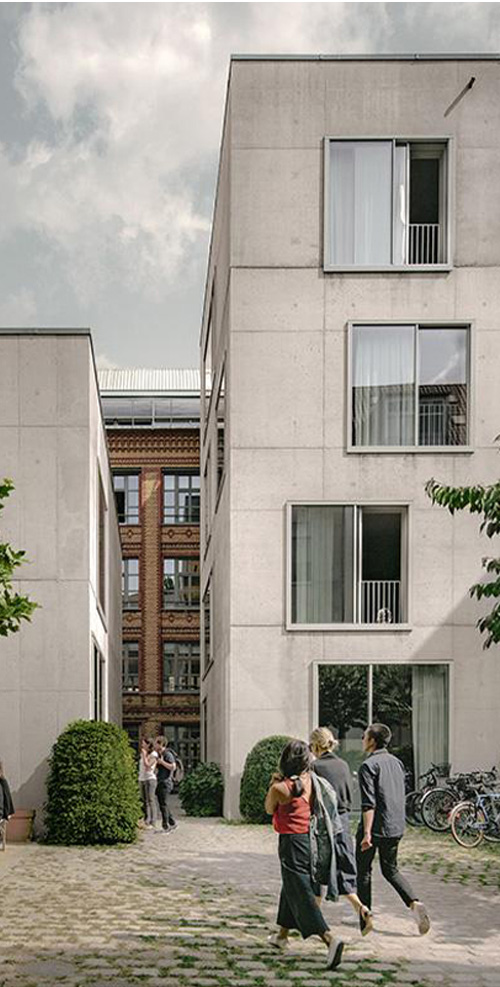
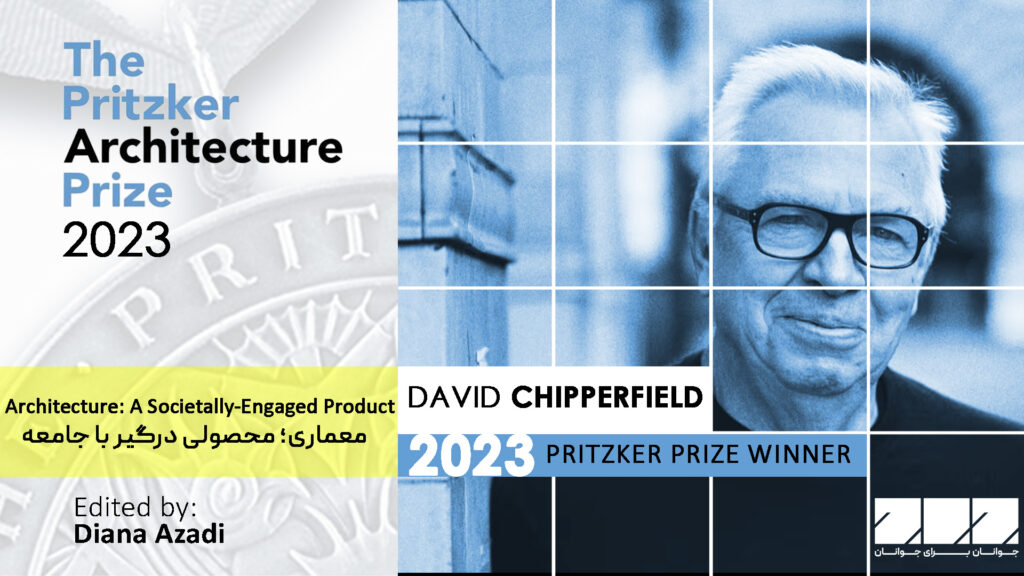
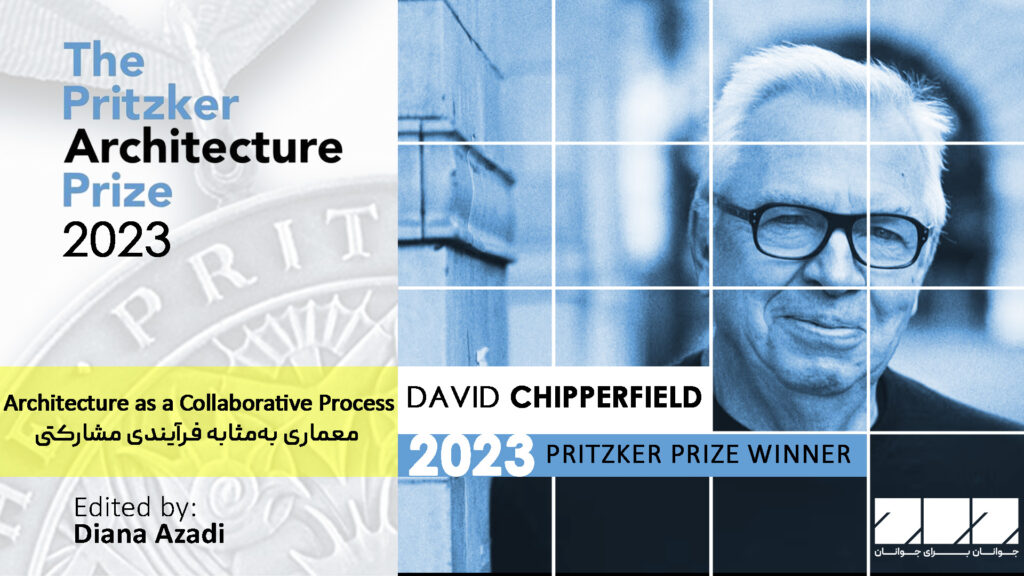
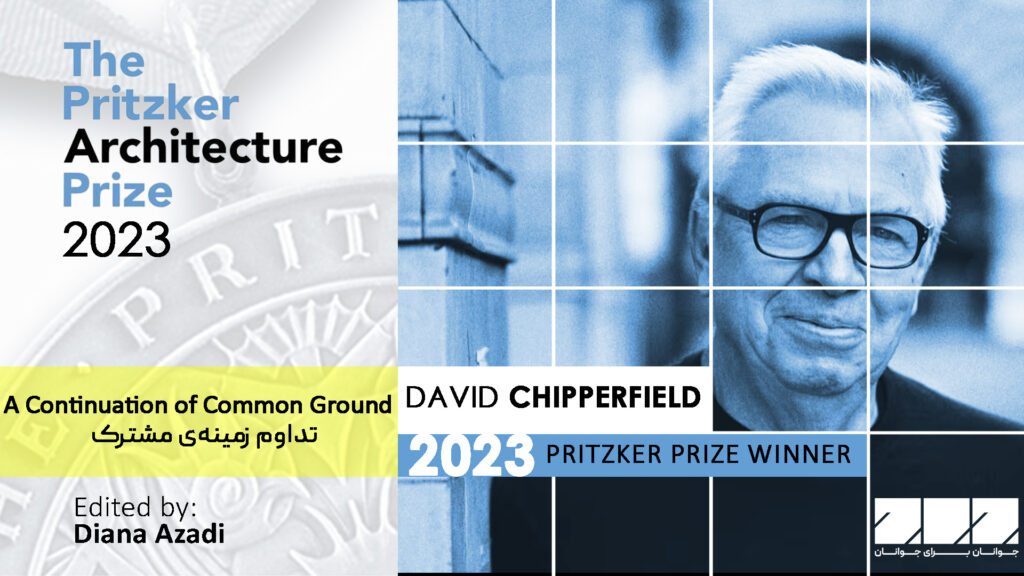
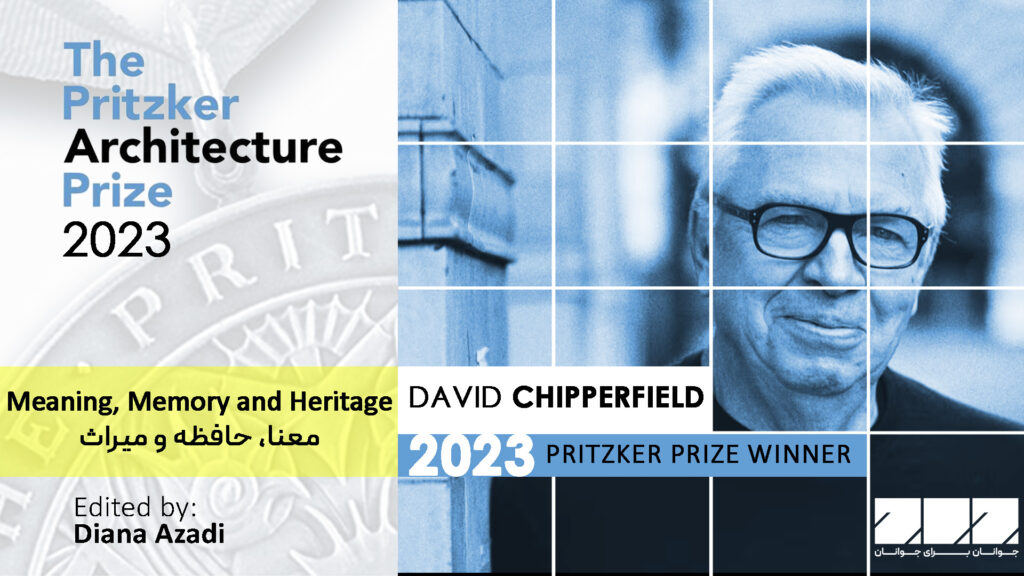
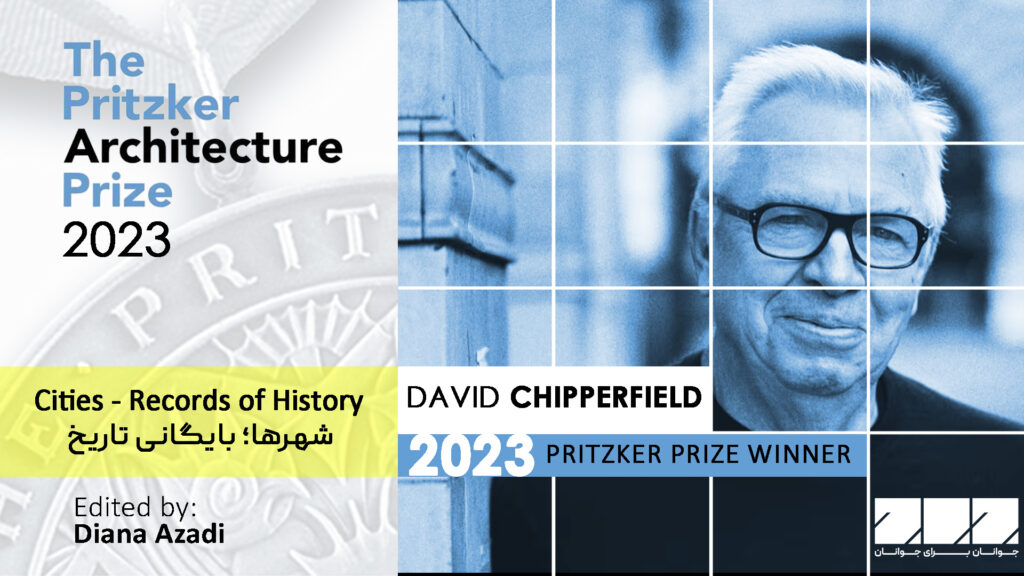
سر دیوید آلن چیپرفیلد، برنده جایزه معماری پریتزکر ۲۰۲۳ شد.
«چه چیزی دیوید آلن چیپرفیلد را به برنده پريتزكر تبدیل کرد؟»
سر دیوید آلن چیپرفیلد، معمار شهری، برنامهریز شهری و فعال اجتماعی، به عنوان برنده جایزه معماری پریتزکر ۲۰۲۳ انتخاب شد. این جایزه، که در سطح بینالمللی به عنوان بالاترین افتخار معماری شناخته میشود، در تاریخ ۷ مارس ۲۰۲۳ در شیکاگو، ایالت ایلینوی (Chicago, IL) ، به او اهدا گردید.
چیپرفیلد که شخصیتی ظریف اما قدرتمند، ملایم اما باوقار دارد، معمار پرکاری است که در خویشتنداری خود رادیکال عمل میکند. او با احترامی عمیق به تاریخ و فرهنگ و با حفظ محیطهای طبیعی و ساختهشده پیشین، عملکرد و دسترسیپذیری ساختمانهای جدید، بازسازیها و مرمتها را از نو بازتصور میکند. طراحیهای مدرن و ماندگار او به چالشهای فوری اقلیمی پاسخ میدهد، روابط اجتماعی را متحول میسازد و شهرها را دوباره زنده میکند.
«از دریافت این افتخار فوقالعاده بسیار تحت تأثیر قرار گرفتهام و خوشحالم که نامم در کنار برندگان پیشین قرار گرفته است؛ کسانی که همه الهامبخش حرفه ما بودهاند. این جایزه را به عنوان انگیزهای میگیرم تا تمرکز خود را نه تنها بر جوهره معماری و معنای آن، بلکه بر سهمی که ما بهعنوان معماران میتوانیم در مواجهه با چالشهای وجودی تغییرات اقلیمی و نابرابریهای اجتماعی داشته باشیم، ادامه دهم. ما میدانیم که معماران میتوانند نقش برجستهتر و فعالتری در خلق جهانی نه تنها زیباتر بلکه عادلانهتر و پایدارتر ایفا کنند. باید به این چالش پاسخ دهیم و نسل آینده را با دیدگاه و شجاعت به پذیرش این مسئولیت الهام بخشیم.»
آثار ساختهشده دیوید چیپرفیلد که بیش از چهار دهه را در بر میگیرند، از نظر نوع و گستره جغرافیایی بسیار متنوع هستند. این مجموعه شامل بیش از صد پروژه است که از ساختمانهای شهری، فرهنگی و دانشگاهی تا فضاهای مسکونی و طرحهای جامع شهری در سراسر آسیا، اروپا و آمریکای شمالی را دربرمیگیرد.
بیانیه هیئت داوران جایزه پریتزکر ۲۰۲۳ در بخشی از سخنان خود چنین آورده است:
«این تعهد به معماریای که حضور شهری کمادعا اما تحولآفرین دارد و تعریف عرصه عمومی — حتی از طریق سفارشات خصوصی — همیشه با صرفهجویی و دوری از حرکات غیرضروری و مدهای گذرا انجام میشود، پیامی بسیار مرتبط با جامعه معاصر ما است. چنین توانایی در پالایش و اجرای عملیات طراحی سنجیده، بُعدی از پایداری است که در سالهای اخیر کمتر آشکار بوده است: پایداری به معنای مرتبط بودن (sustainability as pertinence) نه تنها زائدگیها را حذف میکند بلکه نخستین گام برای خلق سازههایی است که توانایی ماندگاری فیزیکی و فرهنگی را دارند.»
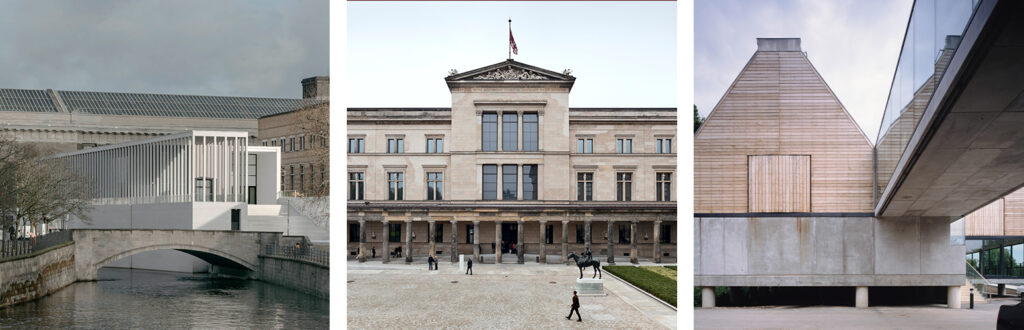
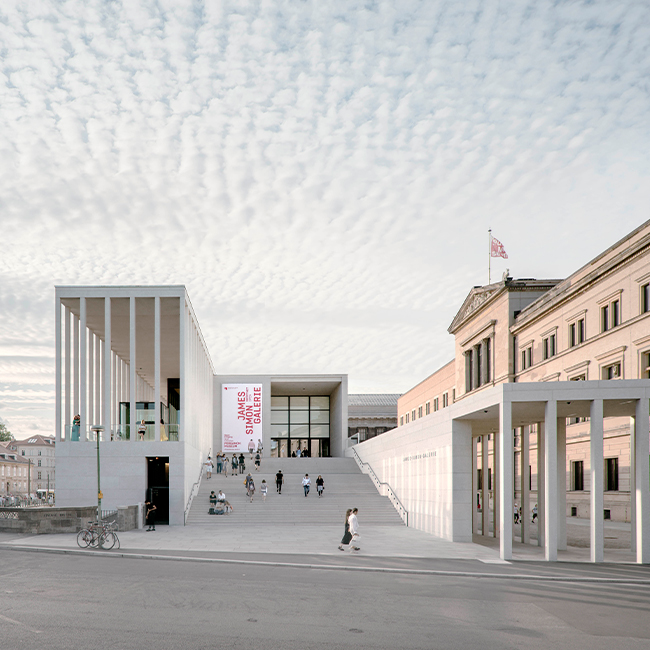
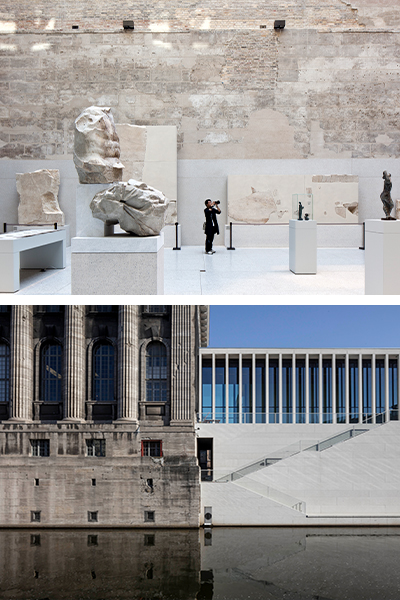
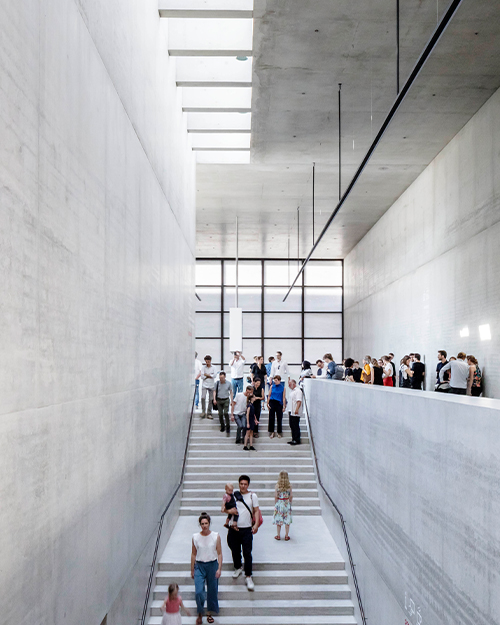
چیپرفیلد تأثیرات زیستمحیطی و تاریخی پایداری را به دقت میسنجد و با پذیرش ساختارهای موجود، در گفتگویی پویا با زمان و مکان طراحی مداخله میکند تا زبان معماری هر منطقه را بپذیرد و تازه کند. گالری جیمز-سایمون (James-Simon-Galerie) که در سال ۲۰۱۸ در برلین، آلمان ساخته شده، بر روی جزیرهای باریک در امتداد کانال کوپفرگربن (Kupfergraben) قرار دارد و از طریق پل شلوسبروکه (Schlossbrücke) قابل دسترسی است. این گالری به عنوان دروازهای به جزیره موزه عمل میکند. ستونهای باشکوه اما متین با مقیاس بزرگ، تراسی را احاطه کردهاند، پلکانی وسیع و فضاهای باز متعدد اجازه میدهند نور فراوانی وارد ورودی بزرگ ساختمان شود. این طراحی امکان دیدهای گسترده از درون بنا و فراتر از آن، حتی به ساختمانهای مجاور و فضای شهری اطراف را فراهم میکند.
تام پریتزکر، رئیس بنیاد هایت که حامی این جایزه است، درباره دیوید چیپرفیلد میگوید:
«او با اطمینان اما بدون تکبر عمل میکند و همواره از مدگرایی اجتناب میورزد تا ارتباط میان سنت و نوآوری را حفظ و تقویت کند و در خدمت تاریخ و بشریت باشد. در حالی که آثارش به زیبایی و استادی اجرا شدهاند، او دستاوردهای طراحیهای خود را با معیار رفاه اجتماعی و محیطزیستی میسنجد تا کیفیت زندگی تمام انسانها را ارتقا دهد.»
در آثار بازسازی، دقت دیوید چیپرفیلد با درک عمیق تاریخی همراه است که دیدگاه او را شکل میدهد تا همواره طراحی و ساختار اصلی بنا را احیا کند، نه اینکه آن را بهطور کامل با معماری مدرن جایگزین نماید. این برنده جایزه بیان میکند:
«بهعنوان یک معمار، من به نوعی حافظ معنا، خاطره و میراث هستم. شهرها اسناد تاریخیاند و معماری پس از یک زمان مشخص به نوعی سند تاریخی تبدیل میشود. شهرها پویا هستند، بنابراین فقط ثابت نمیمانند بلکه تکامل مییابند. در این روند تکامل، ما ساختمانهایی را حذف و جایگزین ساختمانهای دیگر میکنیم. این انتخاب با خود ماست و مفهوم فقط حفاظت از بهترینها کافی نیست؛ بلکه حفاظت از شخصیت و ویژگیهایی که بازتابدهنده غنای تکامل یک شهر هستند نیز اهمیت دارد.»
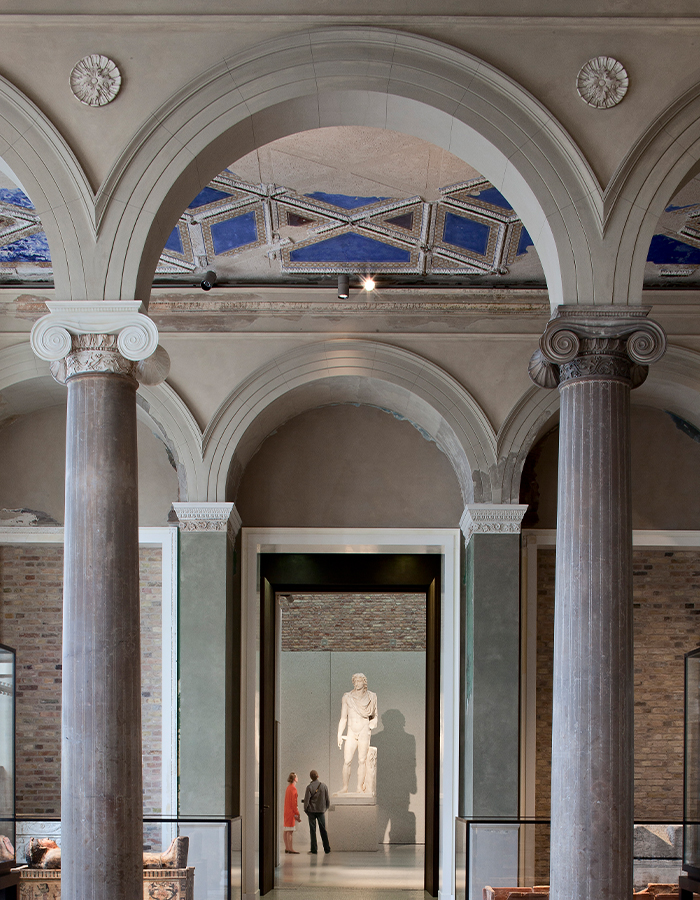
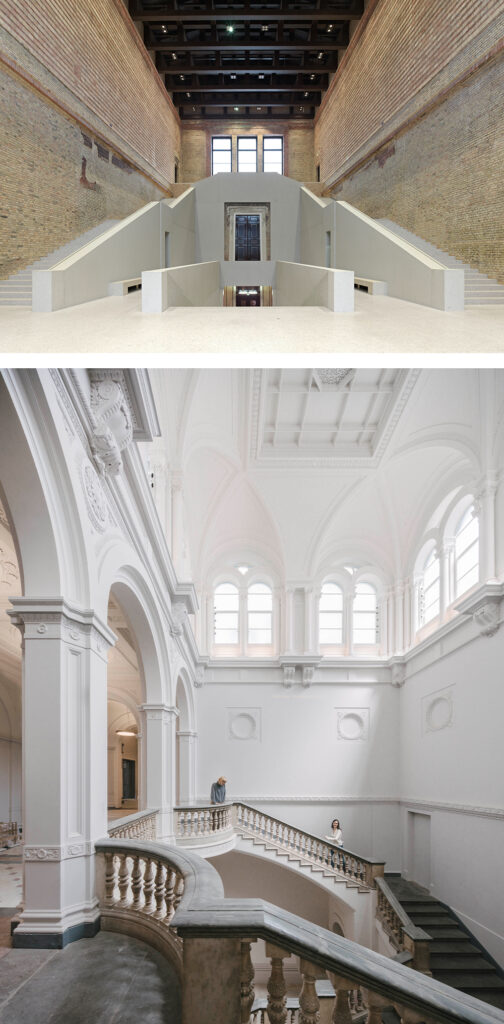
موزه نویس (Neues Museum) در برلین، آلمان، که ابتدا در اواسط قرن نوزدهم ساخته شده و در جنگ جهانی دوم به شدت آسیب دیده و غیرقابل سکونت شده بود، نمونهای بارز از درک عمیق چیپرفیلد در تفکیک مرزهای حفاظت، بازسازی و الحاق است. بخش جدید این بنا در گفتگویی هنرمندانه با بخشهای قدیمی قرار دارد و معماری گذشته را به پیشزمینه میآورد. این رویکرد باعث خلق لحظاتی از مدرنیته شده است؛ مانند راهپله اصلی چشمگیر که توسط دیوارهایی احاطه شده که ردپای نقاشیهای دیواری اصلی و مصالح بازسازیشده، حتی آنهایی که آسیبدیده از جنگ هستند، را نشان میدهند. فضای بیرونی گسترده و دلباز این موزه را به نقطهای متصلکننده برای همه تبدیل کرده است، حتی برای کسانی که هرگز وارد گالریها نمیشوند.
آلخاندرو آراوِنا، رئیس هیئت داوران و برنده جایزه پریتزکر ۲۰۱۶، در توضیح درباره دیوید چیپرفیلد میگوید:
«در دنیایی که بسیاری از معماران پروژهها را فرصتی برای افزودن به مجموعه کاری خود میبینند، او به هر پروژه با ابزارهای خاصی پاسخ میدهد که با دقت و مراقبت فراوان انتخاب کرده است. گاهی این نیازمند حرکتی قوی و باشکوه است و گاهی باید تقریباً ناپدید شود. اما ساختمانهای او همیشه آزمون زمان را پشت سر خواهند گذاشت، زیرا هدف نهایی کار او خدمت به خیر عمومی است. دوری از مدهای زودگذر به او امکان داده که آثارش ماندگار باقی بمانند.»
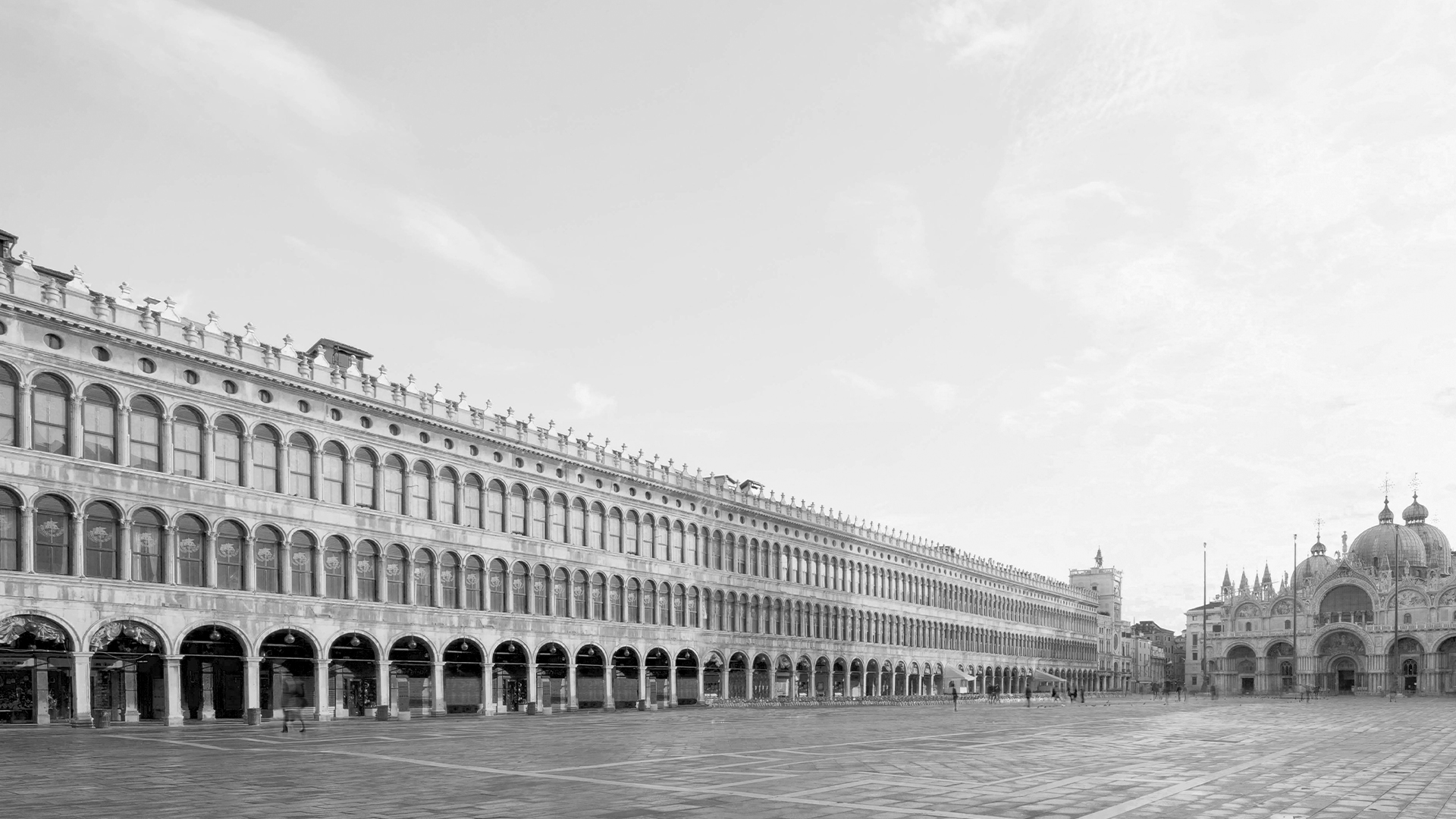
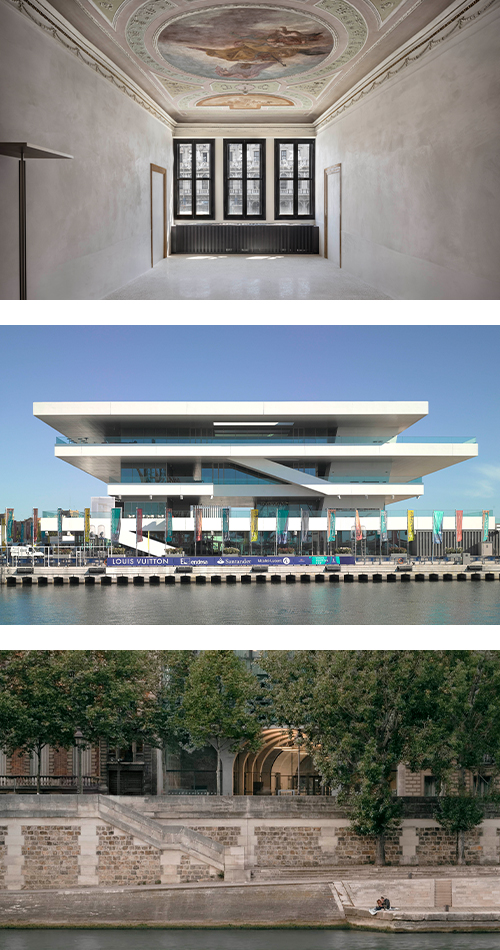
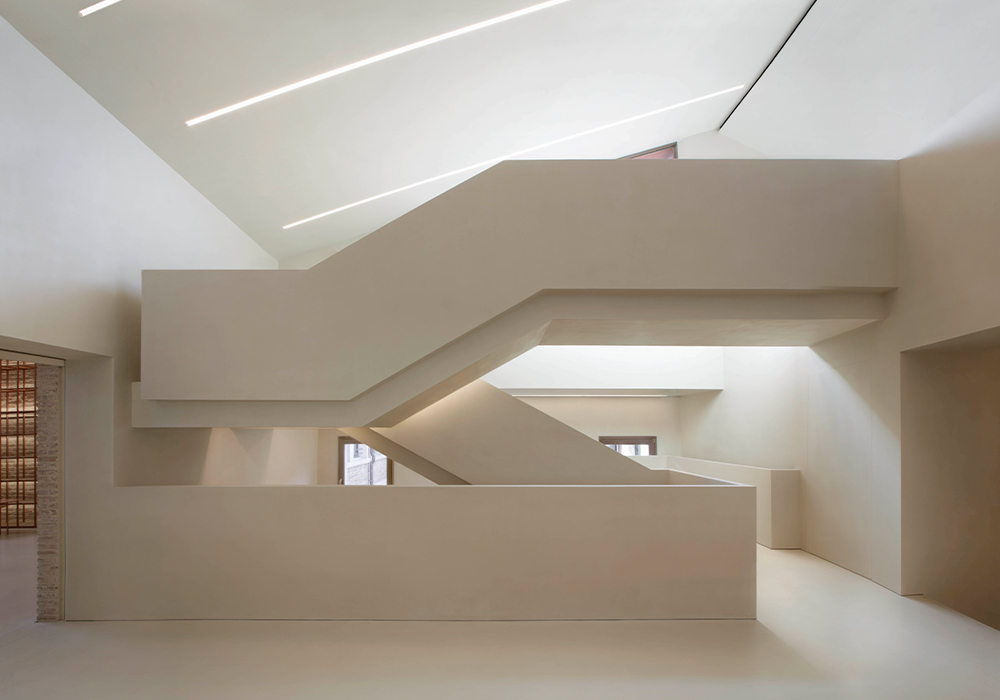
بازسازی و بازآفرینی پروکوراتیه وچیه (Procuratie Vecchie) در ونیز، ایتالیا (۲۰۲۲)، که قدمت آن به قرن شانزدهم بازمیگردد، توانایی این ساختمان شهری را در قلب شهر بازتعریف کرد و برای اولین بار امکان دسترسی عمومی را فراهم آورد. او با تاکید بر همکاری، معتقد است معماری و صنایع دستی به هم پیوستهاند. در این پروژه، از صنعتگران سنتی دعوت کرد تا نقاشیهای دیواری اصلی، کفهای تراتزو و پاستلون و گچبریها را احیا کنند و لایههای تاریخی را آشکار سازند، در حالی که تکنیکهای محلی ساخت و صنعتگری را برای ایجاد مداخلات مدرن هماهنگ، مانند سیستم گردش عمودی، به کار گرفت. ساختمان بازسازیشده اکنون امکان دید از بالا و داخل را فراهم میکند و تراسهای روی پشتبام، فضاهای نمایشگاهی و رویداد، یک آمفیتئاتر و مجموعهای از طاقها که به گالریها میرسند را نمایان میسازد.
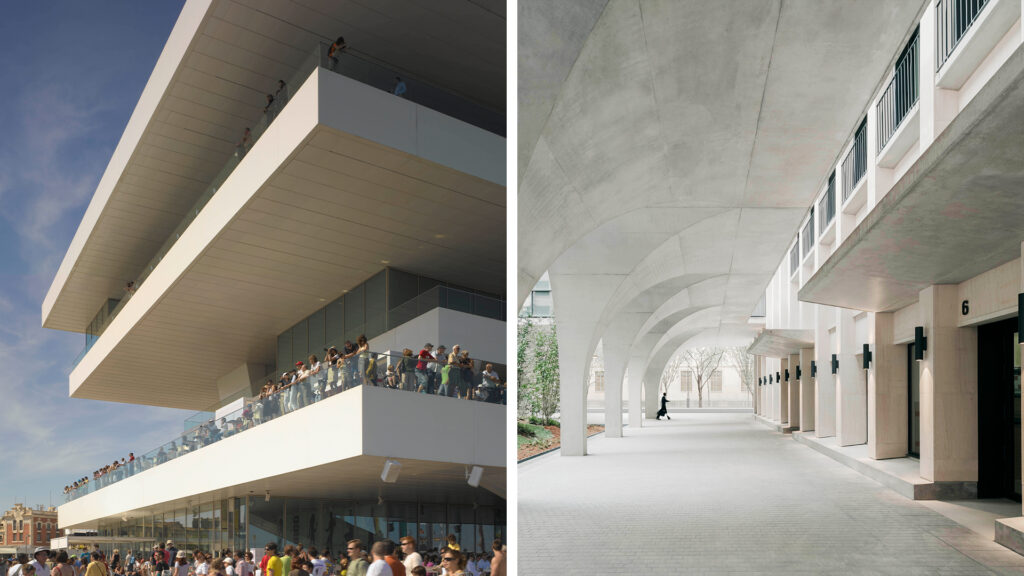
هر پروژهای که او انجام میدهد به یک تلاش مدنی تبدیل میشود که در خدمت جامعه است، مانند ساختمان کاپ آمریکا «ولس ای ونتس» (Veles e Vents) در والنسیا، اسپانیا (۲۰۰۶)، که در اصل به عنوان یک مکان موقت پذیرایی برای تیمها و حامیان مالی مسابقات دریایی طراحی شده بود. فضای خارجی این بنا از فضای داخلی بیشتر است و سکویهای نمایشی پیشآمده به شکل مرادیور با ابعاد بزرگ هستند، به طوری که برخی از آنها تا ۱۵ متر عرض در اطراف هر طبقهی همپوشان گسترده شدهاند. چیپرفیلد برنامهای برای عموم در نظر گرفته است؛ فضاهای فروشگاهی در طبقه اول و سکویی قابل دسترس که دیدی بدون محدودیت به کانال و شهر زیرین ارائه میدهد. یک رمپ از این سطح مسیر مستقیمی به پارکی در شمال سایت ایجاد میکند.
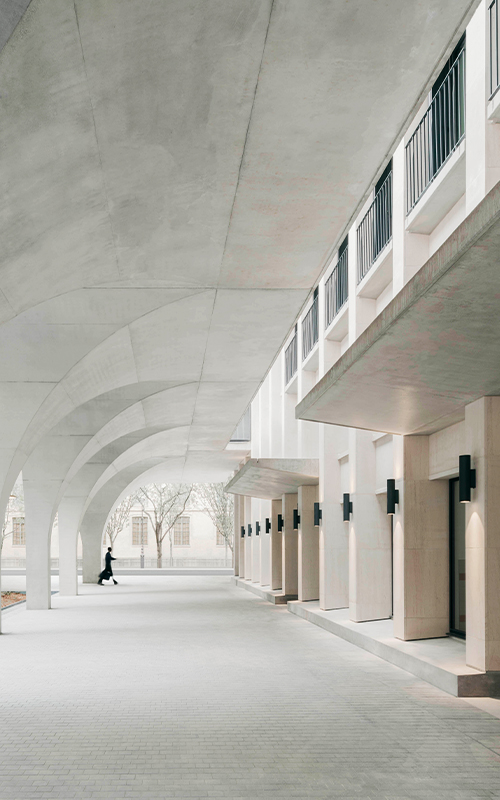
بازسازی و افزودنیهای پروژه مورلند میکسیتی کاپیتال (Morland Mixité Capitale) در پاریس، فرانسه (۲۰۲۲) محله را با ارائه مسکن مقرونبهصرفه و لوکس، فضاهای فروشگاهی و رستوران، یک هتل و هاستل جوانان، فضایی برای نمایشگاه و باغ بام شهری احیا میکند. معمار با بالا بردن حجمهای جدید بر روی طاقهای باربر قوسیشکل که در پایه ساختمان اصلی امتداد دارند، فضایی برای گردهمایی خلق میکند و کسانی را که از کنار یا از طریق مسیر جدید بصری و فیزیکی به رودخانه سن از بولوار مورلند عبور میکنند، دعوت مینماید.
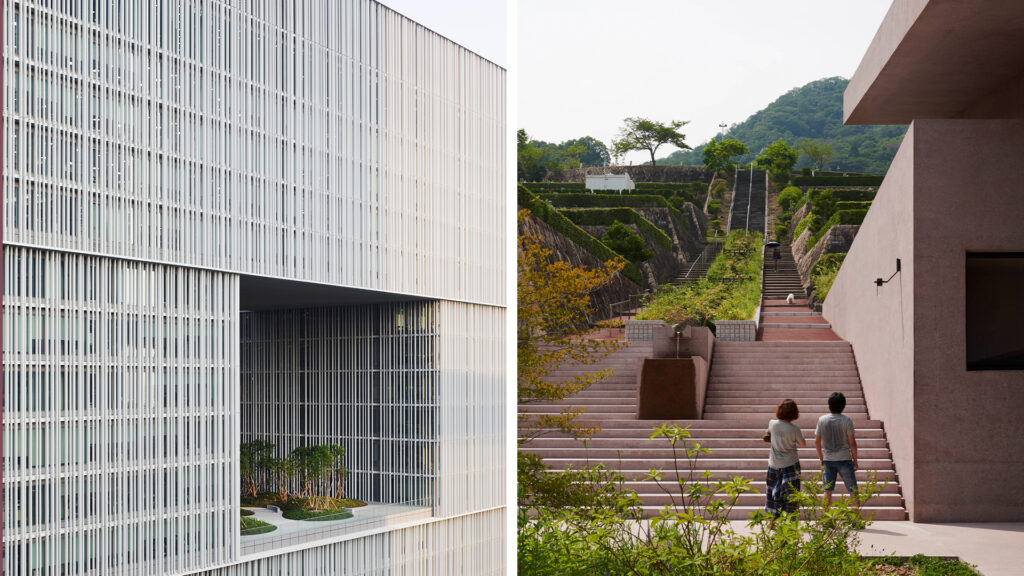
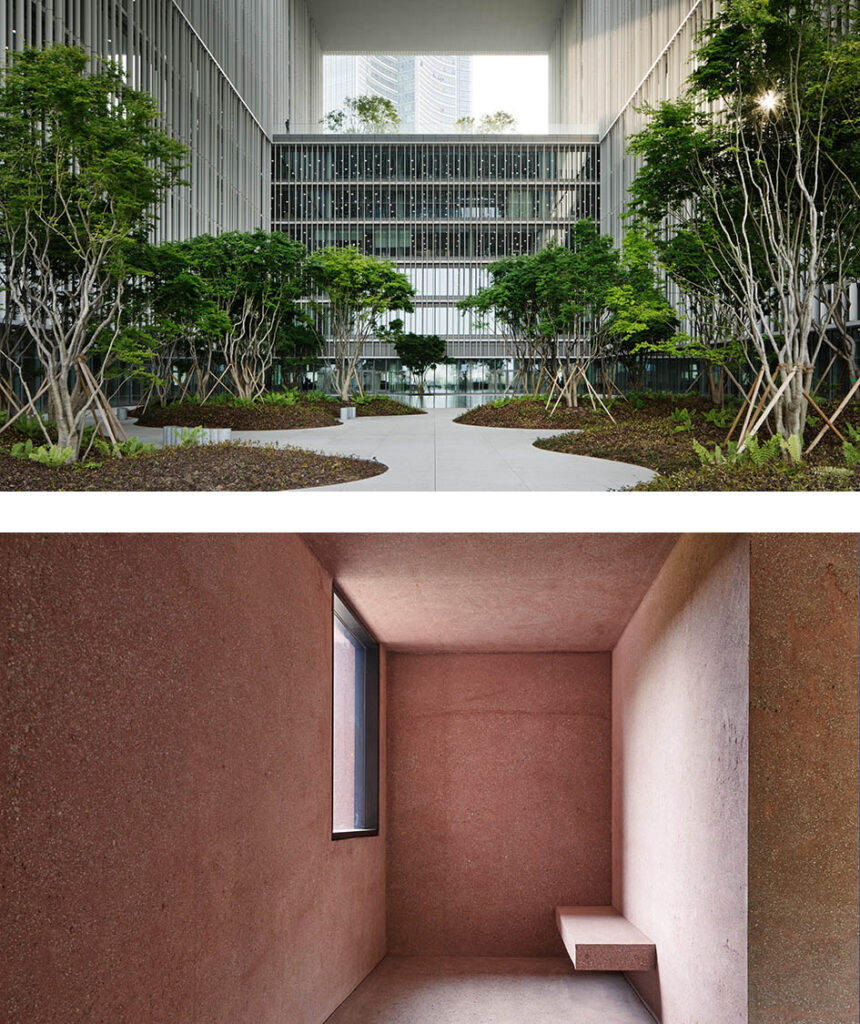
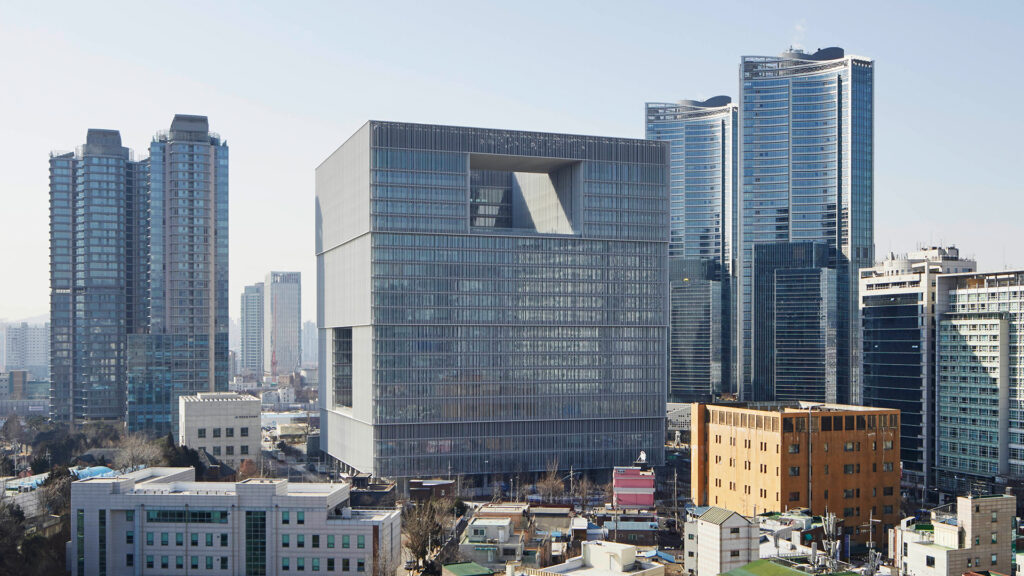
چه در ساختمانهای عمومی و چه خصوصی، دیوید چیپرفیلد فرصتی برای همزیستی و همدلی در جامعه فراهم میکند؛ او فردیت را حفظ و در عین حال حس تعلق اجتماعی را تقویت مینماید. ساختمان مرکزی شرکت آموراپاسفیک (Amorepacific) در سئول، کره جنوبی (۲۰۱۷)، تعادل میان فرد و جمع، خصوصی و عمومی، کار و استراحت را بهخوبی برقرار میکند. پرههای آلومینیومی عمودی روی نمای شیشهای، سایهبان خورشیدی ایجاد کرده و به بهبود شرایط حرارتی و تهویه طبیعی کمک میکنند و در عین حال شفافیتی به وجود میآورند که ارتباط میان ساکنان ساختمان، همسایگان و ناظران را تقویت میکند. فضای اداری توسط یک آتریوم عمومی، موزه، کتابخانه، آمفیتئاتر و رستورانها متعادل شده است. حیاط مرکزی امکان دید به ساختمانهای مجاور را فراهم میکند و باغهای آویزان، جامعه داخل ساختمان را با عناصر بیرونی پیوند میدهند.
در نمازخانه و مرکز بازدیدکنندگان قبرستان ایناگاوا (Inagawa Cemetery Chapel and Visitor Center) در هیگو، ژاپن (۲۰۱۷)، واقع در کوههای هوکوسِتسو، زندگی مادی و معنوی در کنار هم وجود دارد، با فضاهایی برای خلوت و گردهمایی، برای آرامش و جستجو. این بیانهای متصل به هم در ساختمانهای تکحجم به رنگهای خاکی، پلهها و مسیرهایی که در میان زمینهای شیبدار قرار گرفتهاند، منعکس میشوند. همچنین نمازخانه و مرکز بازدیدکنندگان غیرمذهبی و دورافتاده که به صورت مورب در مقابل هم قرار گرفتهاند، این همزیستی را بیشتر نمایان میسازند.
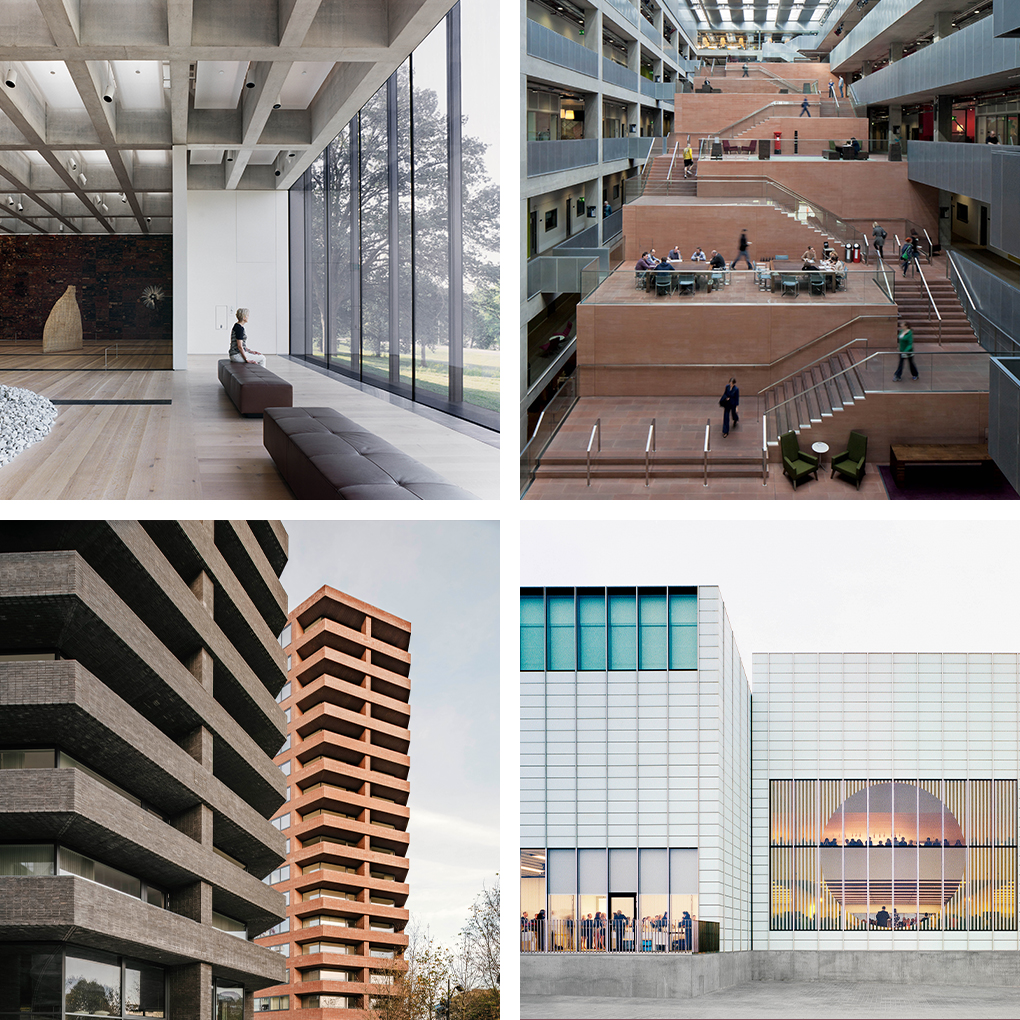
«ما در شهرهای مختلف ساختمانهای یکسان و قابل تشخیص فوری از دیوید چیپرفیلد را نمیبینیم، بلکه ساختمانهای متفاوتی که بهطور خاص برای هر شرایط طراحی شدهاند را مشاهده میکنیم. هر کدام حضور خود را بهطور منحصر به فردی اعلام میکنند، در حالی که ساختمانهای او ارتباطات جدیدی با محله ایجاد میکنند.» این بخش از بیانیه هیئت داوران ۲۰۲۳ ادامه میدهد: «زبان معماری او تعادلی است میان ثبات در اصول بنیادی طراحی و انعطافپذیری نسبت به فرهنگهای محلی… آثار دیوید چیپرفیلد اتحادگرایی میان کلاسیکگرایی اروپایی، پیچیدگی طبیعت بریتانیا و ظرافت ژاپن را به نمایش میگذارند. این تجلی تنوع فرهنگی است.»
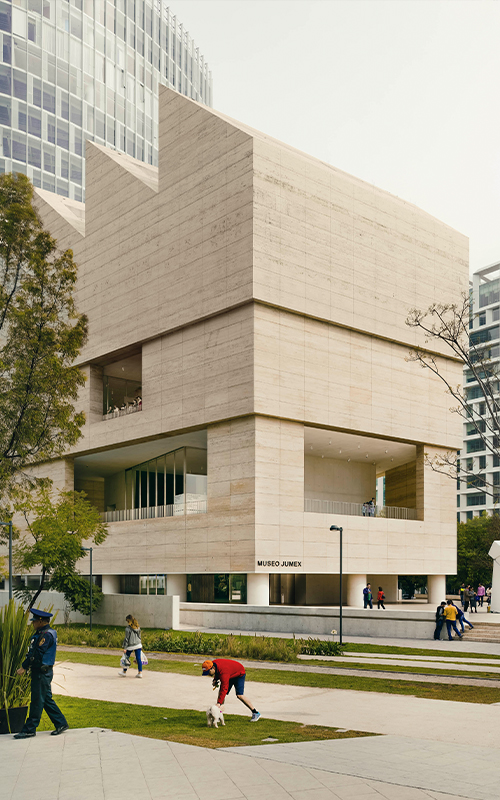
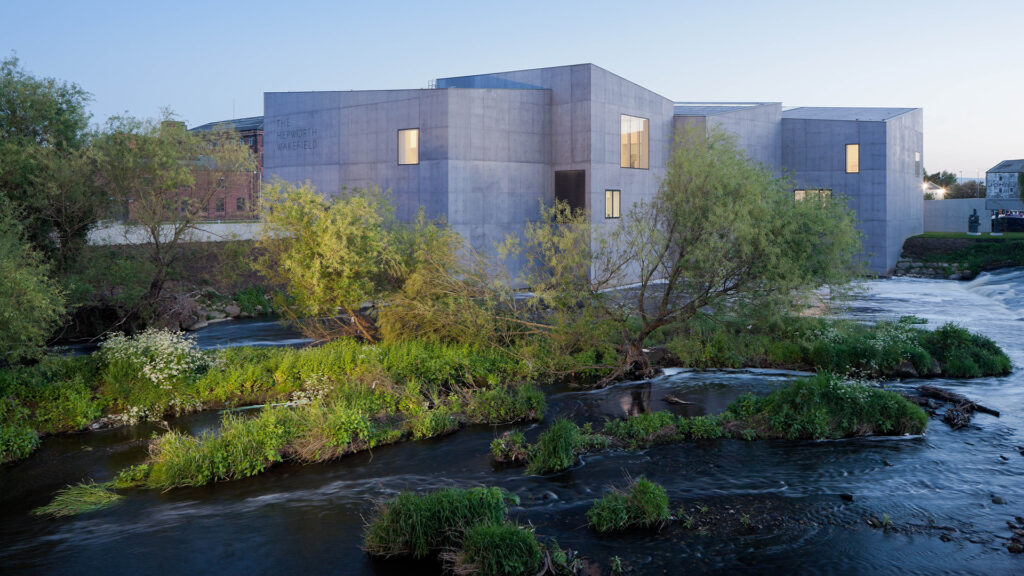
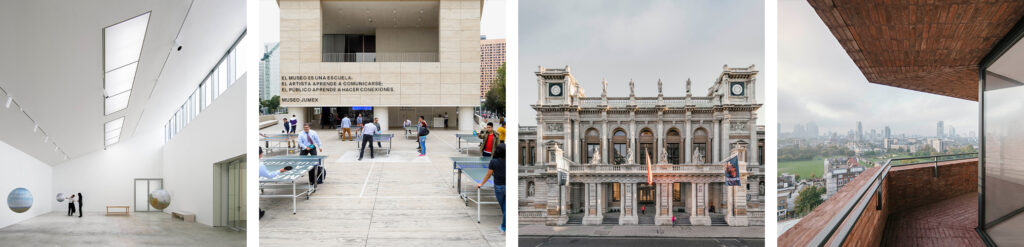
آثار مهم دیگری که در کارنامه دیوید چیپرفیلد قرار دارند عبارتند از: موزه رودخانه و قایقرانی (River and Rowing Museum) در هنلی آن تمز، انگلستان (۱۹۹۷)، دفتر مرکزی بیبیسی اسکاتلند (BBC Scotland) در گلاسگو، انگلستان (۲۰۰۷)، مرکز هنری ترنر کانتِمپرَری (Turner Contemporary) در مارگیت، انگلستان (۲۰۱۱)، موزه هنرهای دانشگاه سنت لوئیس (Campus Saint Louis Art Museum) در میسوری، ایالات متحده آمریکا (۲۰۱۳)، کمپوس یوهیماشتراسه (Campus Joachimstraße) در برلین، آلمان (۲۰۱۳)، موزه جومکس (Museo Jumex) در مکزیکو سیتی، مکزیک (۲۰۱۳)، ساختمان وان پنکراس اسکوئر (One Pancras Square) در لندن، انگلستان (۲۰۱۳)، طرح جامع آکادمی سلطنتی هنرها (Royal Academy of Arts masterplan) در لندن، انگلستان (۲۰۱۸)، هاکستون پرس (Hoxton Press) در لندن، انگلستان (۲۰۱۸) و خانه هنر زوریخ (Kunsthaus Zürich) در زوریخ، سوئیس (۲۰۲۰).
دیوید چیپرفیلد پنجاه و دومین برنده جایزه معماری پریتزکر است. او ساکن لندن بوده و علاوه بر آن، دفاتری در برلین، میلان، شانگهای و سانتیاگو د کومپوستلا را نیز رهبری میکند. مراسم اهدای جایزه پریتزکر ۲۰۲۳ در ماه مه در شهر آتن، یونان برگزار شد.
بیانیه هیئت داوران
جایزه پریتزکر به پاس ویژگیهایی همچون استعداد، چشمانداز و تعهد اعطا میشود؛ ویژگیهایی که بهطور مداوم منجر به آثار قابل توجهی در خدمت بشریت و محیط ساخته شده از طریق هنر معماری شدهاند. کارنامه حرفهای دیوید چیپرفیلد با تعهد بلندمدت، دقت و ثبات در مجموعهای از آثار مشخص میشود که بهطرز بینقصی این دو جنبه را در هم آمیخته و متوازن کرده است.
پاسخهای دقیق، استادانه، حسابشده و آرامی که او به اهداف بلندپروازانه در ساختمانهایش ارائه میدهد، تنها میتواند ناشی از دانش عمیق و پایدار در رشته معماری باشد. با این حال، این پاسخها هرگز خودمحور نیستند و به هیچ عنوان صرفاً هنر برای هنر نیستند؛ بلکه همواره بر هدف والاتر پروژه و تلاش برای خدمت به خیر عمومی و اجتماعی متمرکز باقی میمانند.
دیوید چیپرفیلد «کارش را انجام میدهد» و این کار را با حفظ تعادل میان اهمیت و جایگاه انجام میدهد. فعالیت در چارچوب دانش معماری نیازمند هوش و تواضع است؛ و بهکارگیری این دانش در خدمت یک پروژه مشخص، مستلزم استعداد و بلوغ حرفهای است. او در هر مورد با مهارت ابزارهایی را انتخاب میکند که برای پیشبرد پروژه ضروری هستند، نه آنهایی که صرفاً معمار را بهعنوان هنرمند برجسته کنند. این رویکرد توضیح میدهد که چگونه یک معمار بااستعداد گاهی هنگام بازسازی یا نوسازی بناها و شاهکارهای معماری موجود — مانند ساختمانهای جزیره موزه در برلین یا بهویژه گالری ملی نو (Neue Nationalgalerie) نماد میس ون در روهه در برلین — تقریباً به گونهای ناپدید میشود. همچنین دلیل آن است که چرا گستره مهارتهای دیوید چیپرفیلد وقتی مأمور خلق اثری از صفر میشود، بهصورت کامل و تمامعیار نمایان میگردد.
آثار او همیشه با ویژگیهایی چون ظرافت، مهار شده بودن، حس پایداری، ترکیببندیهای واضح و جزییات دقیق شناخته میشوند. ساختمانهایش هر بار از وضوح، شگفتی، هماهنگی پیچیده با محیط اطراف و حضوری مطمئن برخوردارند. در عصری که با تجاریسازی افراطی، طراحیهای بیش از حد و اغراقهای فراوان همراه است، او همواره تعادل را برقرار میکند: تعادلی میان زبان معماری مدرن و مینیمالیستی و آزادی بیان، میان بیانیههای انتزاعی و ظرافتی دقیق که هرگز از پیچیدگی خالی نیست.
در حالی که دیوید چیپرفیلد همواره کیفیتی دقیق و در عین حال ثابت را در طراحیهای خود حفظ کرده است، او در طیف وسیعی از انواع ساختمانها فعالیت داشته؛ از بناهای عمومی و مدنی گرفته تا سازههای تجاری، مسکونی و خردهفروشی. با این حال، از همان ابتدای کار، موزهها جایگاه ویژهای در آثار او داشتهاند. چه در مقیاس کوچک و بهصورت مستقل در دل چشماندازها، و چه در قالب بناهای یادمانی بزرگ در مکانهای شاخص و اغلب پیچیده و حساس شهری، ساختمانهای موزهای او همواره این تصور را به چالش کشیدهاند که موزه مکانی صرفاً برای فرهنگ نخبگان است. او بارها و بارها نیازهای برنامهریزی موزه را به گونهای تفسیر کرده که نه تنها محلی برای نمایش آثار هنری، بلکه فضایی درهمتنیده با بافت شهری ایجاد کند؛ فضایی که مرزها را در هم میشکند و عموم مردم را به مشارکت دعوت میکند. این موزهها بارها توانستهاند فضاهای عمومی جدید، الگوهای تازه حرکت در شهر و راههای نوینی برای پیوند با بافت موجود ایجاد کنند.
موزهها در دستان چیپرفیلد، چه بهعنوان یک نهاد و چه بهعنوان یک بنا، موجب تحول زندگی شهری در شهرهای محل استقرار خود میشوند. فضاهای باز و سخاوتمندانه بیرونی آنها را نه به دژهایی بسته، بلکه به پلهای ارتباطی و مکانهایی برای گردهمآیی و مشاهده بدل میکند، به گونهای که خود ساختمان هدیهای برای شهر است؛ زمینی مشترک حتی برای کسانی که هرگز وارد گالریها نمیشوند. به طور خلاصه، آثار او تجسم تعادلی مقتدر میان دو مفهوم به ظاهر متناقضاند: از یک سو کامل و مستقل بودن بهعنوان یک طراحی معماری که هر جزئیاتش بخشی دقیق و سنجیده از یک کل است، و از سوی دیگر، ایجاد پیوندهایی زنده با شهر و جامعه که میتواند به شکلی بنیادین، چهره یک محله کامل را دگرگون کند.
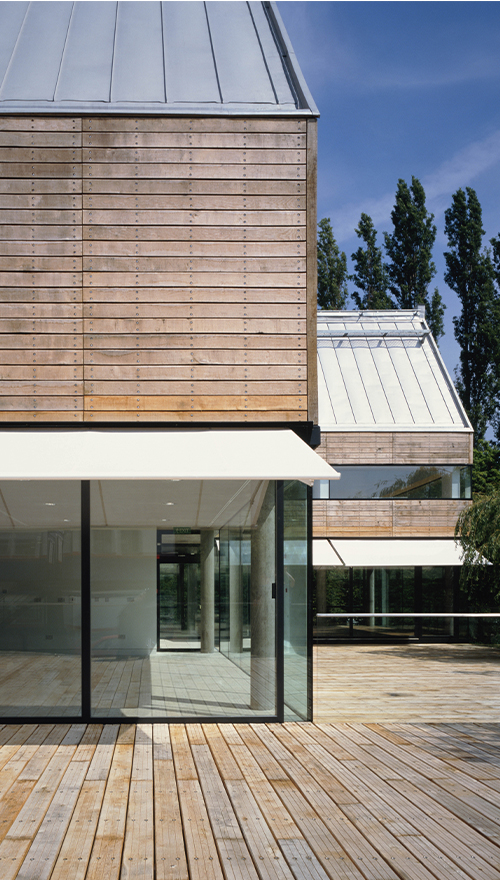
در جستجوی مداوم خود برای دستیابی به مجموعهای متنوع، استوار و منسجم از آثار، دیوید چیپر فیلد همواره از توجه جدی به «روح مکان» و همچنین بافتهای فرهنگی متنوع و روبهرشد محل کار خود غافل نمیماند. ما در شهرهای مختلف شاهد یک ساختمان با امضای ظاهری فوراً قابل شناسایی از او نیستیم، بلکه هر بار ساختمانی متفاوت از او میبینیم که بهطور خاص برای همان شرایط طراحی شده است. هر بنا با حفظ هویت خود، پیوندهای تازهای با محله پیرامونش برقرار میکند. زبان معماری او تعادلی است میان انسجام و پایبندی به اصول بنیادی طراحی و در عین حال انعطافپذیری نسبت به فرهنگهای محلی. او در پروژههای اروپایی خود از ستونبندیها بهره میگیرد و در پروژههای چینی حیاطهای مرکزی را به کار میبندد، مصالح بومی را به شکلی لوکس استفاده میکند و از تکنیکهای معمول در سازههای پیچیده بهره میبرد. او کیفیت زندگی مردم را از رهگذر حسی شاعرانه که همواره از آثارش جاری است، ارتقا میبخشد. آثار دیوید چیپر فیلد، کلاسیکگرایی اروپایی، پیچیدگی ذاتی بریتانیا و حتی لطافت ژاپن را در هم میآمیزد؛ این، حاصل تنوع فرهنگی است.
این تعهد به معماریای که حضوری ملایم اما تحولآفرین در عرصه شهری دارد و تعریف فضاهای عمومی حتی از طریق پروژههای خصوصی، همواره با پرهیز از حرکات غیرضروری، دوری از مدها و روندهای زودگذر و حفظ سادگی همراه است؛ رویکردی که پیامی بسیار مهم برای جامعه معاصر ما دارد. توانایی پالایش و اجرای اقدامات طراحی سنجیده، بُعدی از پایداری را نشان میدهد که در سالهای اخیر کمتر آشکار بوده است: پایداری به معنای تناسب و ارتباط، که نهتنها زائدات را حذف میکند، بلکه نخستین گام در خلق سازههایی است که هم از نظر فیزیکی و هم از نظر فرهنگی ماندگار باشند.
جای شکی نیست که یکی از ویژگیهایی که هنگام مواجهه با آثار دیوید چیپرفیلد به ذهن خطور میکند، «کلاسیک» بودن آنهاست؛ چیزی که توان ایستادگی در برابر گذر زمان را دارد. کلاسیک نه به معنای یک سبک خاص، بلکه به دلیل پایبندی به مسئولیت در قبال عمل و هنر ساختن، و وفاداری به سه اصل اساسی ویتروویوس: استحکام (firmitas)، کارایی (utilitas) و زیبایی (venustas). چیپرفیلد بهجای تلاش برای خلق بیانیههای شاخص و منزوی، با رویکردی شخصی، میان خویشتنداری و جسارت در تفسیر نقش معماری حرکت میکند.
او بر این باور است که وظیفه معمار، ایجاد راههای نوین برای بهبود زندگی و معیشت در سیارهای است که بشر خانه خود را به مکانی شکننده بدل کرده است. دیدگاه او نسبت به این نقش، همواره از تلاش برای ادغام یک ساختمان با محل و فرهنگ بومیاش فراتر رفته و به درک گستردهترین تعریف از «مکان» و «فرهنگ» رسیده است.
در سالهای اخیر، این رویکرد نه به شکل ساختوساز، بلکه با بهکارگیری دانش فضایی و زیستمحیطی برای مدیریت و مراقبت از مناظر منطقهای که او آن را خانه دوم خود مینامد، یعنی گالیسیا در شمالغربی اسپانیا، نمود پیدا کرده است. در اینجا، بنیاد RIA که توسط او تأسیس شده، با هدف حفاظت از پیوندهای درهمتنیده مناظر، کشاورزی، بومشناسی و سنتهای سرزمینی این منطقه فعالیت میکند تا این اکوسیستم، حتی در مواجهه با چالشهای تغییرات اقلیمی، برای دهههای آینده حفظ و تقویت شود.
به پاس سختکوشی، صداقت و مرتبط بودن مجموعه آثارش که فراتر از حوزه معماری، بیانگر تعهد اجتماعی و محیطزیستی اوست، دیوید چیپرفیلد بهعنوان برنده جایزه پریتزکر ۲۰۲۳ معرفی شد.
محل برگزاری مراسم
آگورای باستانی
آگورای باستانی آتن در طول هزاران سال بهعنوان محل گردهمایی مردم عمل میکرد. این مکان در اواخر دوره نوسنگی (۳۰۰۰ پیش از میلاد) نخست بهعنوان یک محوطه مسکونی و تدفینی مورد استفاده قرار میگرفت و سپس در سده ششم پیش از میلاد به عرصهای عمومی تبدیل شد. آگورا مرکز شهر بهشمار میآمد و در شمالغربی صخره مقدس آکروپولیس، میان تپههای آریون و آگورایون کولونوس قرار داشت. این فضا علاوه بر میزبانی از فعالیتهای بازرگانی و سکونتگاهها، محل برگزاری تجمعات مذهبی، فرهنگی و سیاسی نیز بود. آگورای باستانی بهعنوان نمادی از دموکراسی و شهروندی شناخته میشد و فیلسوفانی همچون سقراط، افلاطون، دیوژن سینوپی و کراتس تبسی در آن حضور مییافتند.
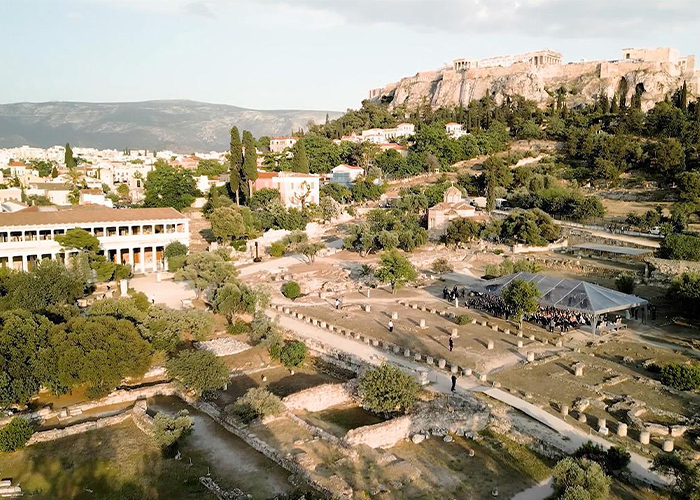
در طول تاریخ طولانی خود، آگورا بارها از جنگها و یورشها آسیب دید و در نهایت متروک شد. کاوشهای باستانشناسی این محوطه همچنان ادامه دارد. این تلاشها شامل فعالیتهای گسترده «انجمن باستانشناسی یونان» در سالهای ۱۸۵۹ تا ۱۹۱۲، «انستیتوی باستانشناسی آلمان» در سالهای ۱۸۹۶ تا ۱۸۹۷ و همچنین «مدرسه آمریکایی مطالعات کلاسیک» در سالهای ۱۹۳۱ تا ۱۹۴۱ بوده است. مدرسه اخیر همچنین طی سالهای ۱۹۵۲ تا ۱۹۵۶ اقدام به بازسازی «رواق آتالوس» کرد؛ بنایی که امروزه موزه آگورای باستانی را در خود جای داده است.
ویدیوهای یوتیوب
David Alan Chipperfield
This translation was carried out by Diana Azadi, an architecture undergraduate student
(English)
Biography
Sir David Alan Chipperfield (b. 1953) was born in London and raised on a countryside farm in Devon, southwest England. A collection of barns and outbuildings, filled with childhood wonderment and recollection, shape his first strong physical impression of architecture.
“I think good architecture provides a setting, it’s there and it’s not there. Like all things that have great meaning, they’re both foreground and background, and I’m not so fascinated by foreground all the time. Architecture is something which can intensify and support and help our rituals and our lives. The experiences in life that I gravitate toward and enjoy most are when normal things have been made special as opposed to where everything is about the special.”
He graduated from the Kingston School of Art in 1976 and the Architectural Association School of Architecture in London in 1980, where he learned to become a critic, reenvisioning the potential of each element to stretch every project beyond the task itself.
“Designing isn’t coming up with colors and shapes. It’s about developing a series of questions and ideas which have a certain rigor and consequence to them. And if you can do that, it doesn’t matter which path you go down, as long as you go down the path well and have been consequential in the process.”
He worked under Douglas Stephen, Norman Foster, 1999 Pritzker Prize Laureate, and the late Richard Rogers, 2007 Pritzker Prize Laureate, before founding David Chipperfield Architects in London in 1985, which later expanded to additional offices in Berlin (1998), Shanghai (2005), Milan (2006) and Santiago de Compostela (2022).
His early career began on Sloane Street, designing a retail interior for the late Issey Miyake, leading to architectural work in Japan. The River and Rowing Museum (Henley-on-Thames, United Kingdom, 1989–1997) marked his inaugural building in his native country. He continued his work abroad, to early success for the reconstruction and reinvention of the Neues Museum (Berlin, Germany, 1993–2009) and the newly constructed James-Simon-Galerie (Berlin, Germany, 1999–2018). He credits his heightened sense of responsibility to these formative professional years, building in other countries for other cultures.
Collaboration has always been fundamental to his practice, upholding with certitude that, “the reality is that good buildings come from good process and good process means that you are engaging and collaborating with different forces.” During four decades, he has produced over one hundred works, which are expansive in typology and geography, ranging from civic, cultural and academic buildings to residences and urban masterplanning throughout Asia, Europe and North America.
As his practice grew more prolific, so did his advocacy for social and environmental welfare, censuring the commodification of architecture that serves global power rather than local society, and the interrelated lack of permanence that contributes to the climate crisis. “Architects can’t operate outside of society. We need society to come with us. And yes, maybe we can provoke and complain, and we can find models. But we need a planning framework, we need ambitions, we need priorities. Essentially, what we have to hope now is that the environmental crisis makes us reconsider priorities of society, that profit is not the only thing that should be motivating our decisions.”
Sir David Alan Chipperfield CH Receives the 2023 Pritzker Architecture Prize
“What made David Alan Chipperfield The Pritzker winner?”
Chicago, IL (March 7, 2023) – Civic architect, urban planner and activist, Sir David Alan Chipperfield has been selected as the 2023 Laureate of The Pritzker Architecture Prize, the award that is regarded internationally as architecture’s highest honor.
Subtle yet powerful, subdued yet elegant, he is a prolific architect who is radical in his restraint, demonstrating his reverence for history and culture while honoring the preexisting built and natural environments, as he reimagines functionality and accessibility of new buildings, renovations and restorations through timeless modern design that confronts climate urgencies, transforms social relationships and reinvigorates cities.
“I am so overwhelmed to receive this extraordinary honour and to be associated with the previous recipients who have all given so much inspiration to the profession,” remarks Chipperfield. “I take this award as an encouragement to continue to direct my attention not only to the substance of architecture and its meaning but also to the contribution that we can make as architects to address the existential challenges of climate change and societal inequality. We know that, as architects, we can have a more prominent and engaged role in creating not only a more beautiful world but a fairer and more sustainable one too. We must rise to this challenge and help inspire the next generation to embrace this responsibility with vision and courage.”
His built works, spanning over four decades, are expansive in typology and geography, including over one hundred works ranging from civic, cultural and academic buildings to residences and urban masterplanning throughout Asia, Europe and North America.
The 2023 Jury Citation of the Laureate, states, in part, “This commitment to an architecture of understated but transformative civic presence and the definition—even through private commissions—of the public realm, is done always with austerity, avoiding unnecessary moves and steering clear of trends and fashions, all of which is a most relevant message to our contemporary society. Such a capacity to distill and perform meditated design operations is a dimension of sustainability that has not been obvious in recent years: sustainability as pertinence, not only eliminates the superfluous but is also the first step to creating structures able to last, physically and culturally.”
Chipperfield calculates the environmental and historical impacts of permanence, embracing the preexisting, designing and intervening in dialogue with time and place to adopt and refresh the architectural language of each locale. James-Simon-Galerie (Berlin, Germany, 2018) situated on a narrow island along the Kupfergraben canal and accessible by the Schlossbrücke bridge, serves as the gateway to Museum Island. Commanding, though discreet, colonnades with grand scale enclose a terrace, a wide expansive staircase and a manifold of open spaces allow abundant light into the large entryway of the building. The design enables generous views from within and beyond, even through to adjacent buildings and the surrounding urban landscape.
“He is assured without hubris, consistently avoiding trendiness to confront and sustain the connections between tradition and innovation, serving history and humanity,” comments Tom Pritzker, Chairman of the Hyatt Foundation, which sponsors the award. “While his works are elegantly masterful, he measures the achievements of his designs by social and environmental welfare to enhance the quality of life for all of civilization.”
Alejandro Aravena, Jury Chair and 2016 Pritzker Prize Laureate, elaborates, “In a world where many architects view a commission as an opportunity to add to their own portfolio, he responds to each project with specific tools that he has selected with preciseness and great care. Sometimes it requires a gesture that is strong and monumental, while other times, it requires him to almost disappear. But his buildings will always stand the test of time because the ultimate goal of his operation is to serve the greater good. The avoidance of what’s fashionable has allowed him to remain permanent.”
His restoration and reinvention of the Procuratie Vecchie (Venice, Italy, 2022), which dates back to the 16th century, redefined the civic ability of this building within the heart of the city to allow general access for the first time. He elevates partnership through his processes, upholding his belief that architecture and craft are intertwined. He called upon traditional craftsmen to revive original frescoes, terrazzo and pastellone flooring and plasterworks, uncovering layers of history, while incorporating local artisan and building techniques to produce modern correlative interventions such as a vertical circulation. The restored building now enables views from above and within, revealing rooftop terraces, exhibition and event spaces, an auditorium and an enfilade of arches that diverge into galleries.
Every work becomes a civic undertaking serving society, such as the America’s Cup Building ‘Veles e Vents’ (Valencia, Spain, 2006), intended primarily as a temporary hospitality venue for offshore teams and sponsors. Exterior space exceeds interior and the cantilevered viewing decks are miradors, generous in size, some spanning 15 meters in width around the perimeter of each overlapping level. Chipperfield infuses a program for the public, through first-floor retail spaces and an accessible deck that offers unrestricted views of the canal and city below. A ramp from this level creates a direct pathway to a park just north of the site. His restoration and addition of Morland Mixité Capitale (Paris, France, 2022) revitalizes the neighborhood with affordable and luxury housing, retail and restaurant venues, a hotel and youth hostel, an installation space and an urban rooftop garden. By raising the new volumes on vaulted load-bearing arcades which continue along at the base of the original building, the architect creates a space to gather, inviting those to pass by or pass through the new visual and physical passageway to the Seine River from the Boulevard Morland.
Whether through public or private buildings, he bestows unto society the opportunity for coexistence and communion, protecting individuality while fostering a societal sense of belonging. The headquarters for Amorepacific (Seoul, Republic of Korea, 2017) harmonize the individual and the collective, the private and the public, work and respite. Vertical aluminum fins across the glass façade provide solar shading to aid thermal conditions and natural ventilation, and create a translucency, encouraging a rapport between the building’s occupants, its neighbors and observers. Office space is equipoised by a public atrium, museum, library, auditorium and restaurants. A central courtyard allows views through to nearby buildings and hanging gardens further engage the community inside with the elements outside. At the Inagawa Cemetery Chapel and Visitor Center (Hyogo, Japan, 2017), situated in the Hokusetsu Mountains, the physical and spiritual coexist, with places of solitude and gathering, for peace and seeking. These interconnected expressions are mirrored in the earth-toned monolithic buildings, stairs and pathways residing amidst the sloped terrain, and the secluded non-denominational chapel and visitor center that are juxtaposed diagonal from one another.
“We do not see an instantly recognizable David Chipperfield building in different cities, but different David Chipperfield buildings designed specifically for each circumstance. Each asserts its presence even as his buildings create new connections with the neighbourhood,” continues the 2023 Citation. “His architectural language balances consistency with the fundamental design principles and flexibility towards the local cultures…The work of David Chipperfield unifies European classicism, the complex nature of Britain, and even the delicateness of Japan. It is the fruition of cultural diversity.”
Significant works also include the River and Rowing Museum (Henley-on-Thames, United Kingdom, 1997), BBC Scotland headquarters (Glasgow, United Kingdom, 2007), Turner Contemporary (Margate, United Kingdom, 2011), Campus Saint Louis Art Museum (Missouri, United States of America, 2013), Campus Joachimstraße (Berlin, Germany, 2013), Museo Jumex (Mexico City, Mexico, 2013), One Pancras Square (London, United Kingdom, 2013), Royal Academy of Arts masterplan (London, United Kingdom, 2018), Hoxton Press (London, United Kingdom, 2018) and Kunsthaus Zürich (Zurich, Switzerland, 2020).
Chipperfield is the 52nd Laureate of the Pritzker Architecture Prize. He resides in London and leads additional offices in Berlin, Milan, Shanghai and Santiago de Compostela. The 2023 Pritzker Prize ceremony held in May, Athens, Greece.
Jury Citation
The Pritzker Prize is conferred in acknowledgment of those qualities of talent, vision and commitment, which have persistently produced significant contributions to humanity and the built environment through the art of architecture. The career of David Chipperfield is marked by a long term, rigour and consistency in a body of work that has seamlessly integrated and balanced both terms of that equation.
The careful, well-crafted, precise and calm responses he has offered to the goals aspired to in his buildings can only originate in a deep and sustained knowledge of the discipline. Yet, those responses are never self-centred, nor do they serve in any way as art for art’s sake: rather, they always remained focused on the higher purpose of the undertaking and on the pursuit of civic and public good.
David Chipperfield ‘does his job’, and he does it by balancing relevancy and stature. To operate anchored to the body of knowledge of the discipline or architecture requires both intelligence and modesty; to put such knowledge at the service of a given project requires talent and maturity. He has in every case skilfully chosen the tools that are instrumental to the project instead of those that might only celebrate the architect as artist. Such an approach explains how it is that a gifted architect can sometimes almost disappear when working on the restoration or renovation of existing buildings and architectural masterpieces like those on Berlin’s Museum Island or even more in the case of Mies van der Rohe’s iconic Neue Nationalgalerie in Berlin. It also explains why the wide spectrum of David Chipperfield’s skills appears in full when he is called upon to create from scratch.
Always characterized by elegance, restraint, a sense of permanence, as well as clear compositions and refined detailing, his buildings each time exude clarity, surprise, sophisticated contextuality and confident presence. In an era of excessive commercialization, over-designing, and over-exaggeration, he can always achieve balance: between a modern minimalistic architectural language and freedom of expression, between abstract statements and rigorous elegance never devoid of complexity.
While preserving a meticulous yet consistent quality of design, David Chipperfield has continually worked across a wide array of building types from public civic buildings to commercial, residential and retail structures. But from early in his career, museums have been a particular focus. Ranging across small-scale works free standing in the landscape to large-scale monuments in prominent and often complex and delicate urban locations, his museum buildings have always defied the notion that a museum is a place for elite culture. Over and over, he has interpreted the demands of the museum program to create not only a showcase for art but also a place interwoven with its city, breaking down boundaries and inviting the public at large to engage. Over and over, his museum buildings have generated new civic spaces, new patterns of movement in the city and new ways of integrating existing fabric.
At once architectural and museological projects, in Chipperfield’s hands museums as institutions and buildings offer a transformation of the urban life of the cities where they are located. Generous outdoor spaces make them not fortresses but connectors, places for gathering and observing, such that the building itself is a gift to the city, a common ground even for those who never enter the galleries. In short, his buildings embody a commanding balance of the seemingly contradictory notions of being complete in and of themselves as architectural designs where every detail is conceived as a carefully studied part of a whole, and at the same time create interconnections to the city and to the society in such a way as to fundamentally transform a whole district.
In his persistent search for a diverse, solid and coherent body of work, David Chipperfield manages not to deviate from a serious consideration of the genius loci—the spirit of the place—or of the growing diverse cultural contexts in which he works. We do not see an instantly recognizable David Chipperfield building in different cities, but different David Chipperfield buildings designed specifically for each circumstance. Each asserts its presence even as his buildings create new connections with the neighbourhood. His architectural language balances consistency with the fundamental design principles and flexibility towards the local cultures. He includes colonnades in his European projects and courtyards in the Chinese ones, he utilizes local materials in luxurious ways, ordinary techniques in complex structures. He enhances the quality of people’s lives through a poetic sensation that always flows from his buildings. The work of David Chipperfield unifies European classicism, the complex nature of Britain and even the delicateness of Japan. It is the fruition of cultural diversity.
This commitment to an architecture of understated but transformative civic presence and the definition—even through private commissions—of the public realm, is done always with austerity, avoiding unnecessary moves and steering clear of trends and fashions, all of which is a most relevant message to our contemporary society. Such a capacity to distil and perform meditated design operations is a dimension of sustainability that has not been obvious in recent years: sustainability as pertinence, not only eliminates the superfluous but is also the first step to creating structures able to last, physically and culturally.
No wonder one of the attributes that come to mind when experiencing the work of David Chipperfield is that of a classic, something that will be able to stand the test of time. Classic not by style but by being faithful to a responsibility towards the act and to the art of building, faithful to the three essential Vitruvian qualities: firmitas, utilitas, venustas (strength, usefulness, beauty). Far from looking towards creating iconic, isolated statements, Chipperfield alternates restraint and courage in a very personal interpretation of the role of architecture.
David Chipperfield believes that is the role of the architect to foster new ways of improving life and livelihoods on a planet where mankind has made our very home a place of fragility. His vision of such role has continually expanded from ways to integrate an individual building into both its site and its local culture, to understanding the broadest definition of site and culture.
In more recent years, this has taken the form not of building but of bringing spatial and environmental expertise to curate and care for the landscapes of a region which he has come to call a second home, Galicia in North-western Spain. Here the Fundación RIA has sought to advise on preserving the intertwined landscape, agriculture, ecology and land traditions of a region to help preserve and extend an eco-system into the coming decades even in the face of the challenges of climate change.
For the rigour, integrity and pertinence of a body of work that—beyond the realm of the architecture discipline—speaks for his social and environmental commitment, David Chipperfield is named the 2023 Pritzker Prize Laureate.
Ceremony Venue, The Ancient Agora
The Ancient Agora of Athens served as a gathering place over many millennia – as both a residential and burial site in the late Neolithic period (3000 B.C.E.) before becoming a public area in the 6th century B.C.E. It was the city center, located to the northwest of the Sacred Rock of the Acropolis and bordered by the Arion and the Agoraion Kolonos hills, housing commerce and residences, and hosting religious, cultural and political assembly. A symbol of democracy and citizenship, the site welcomed philosophers Socrates, Plato, Diogenes of Sinope and Crates of Thebes.
Suffering damage from war and invasions throughout its long history, the Ancient Agora was eventually abandoned. Excavations are ongoing and have included extensive efforts by the Greek Archaeological Society from 1859-1912, the German Archaeological Institute from 1896-97, and the American School of Classical Studies from 1931-1941, the latter of which also reconstructed the Stoa of Attalos from 1952-1956 and currently houses the Museum of the Ancient Agora.
sources
This translation was carried out by
Diana Azadi
an architecture undergraduate student
Textual sources
- https://www.pritzkerprize.com/laureates/sir-david-alan-chipperfield-ch#laureate-page-2501
- https://www.pritzkerprize.com/laureates/sir-david-alan-chipperfield-ch#laureate-page-2506
- https://www.pritzkerprize.com/laureates/sir-david-alan-chipperfield-ch#laureate-page-2511
- https://www.pritzkerprize.com/laureates/sir-david-alan-chipperfield-ch#laureate-page-2541